Building Bonds: How Small Assisted Living Homes Foster Real Relationships
Business Name: BeeHive Homes of Mesquite
Address: 780 2nd S St, Mesquite, NV 89027
Phone: (702) 381-6899
BeeHive Homes of Mesquite
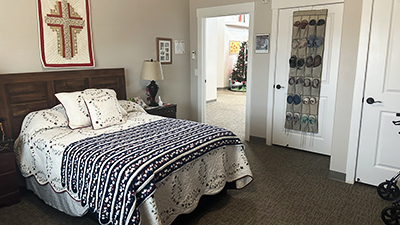
At BeeHive Homes of Mesquite, Nevada, we offer the finest assisted living experience available in a cozy, comfortable homelike setting. Each of our residents has their own spacious room with an ADA approved bathroom and shower. We prepare and serve delicious home-cooked meals three times a day every day. We maintain a small, friendly elderly care community. We provide regular activities that our residents find fun and contribute to their health and well-being. Our staff is attentive and caring and provides assistance with daily activities to our senior living residents in a loving and respectful manner. We would like to invite you to tour and experience our assisted living home and feel the difference.
780 2nd S St, Mesquite, NV 89027
Business Hours
Walk into a small assisted living home at breakfast time and you can typically inform within thirty seconds whether genuine relationships live there.
Sometimes you see it in a caregiver carefully tapping a resident's preferred mug before putting coffee, since that noise assists her orient to the morning. Or in the method a nurse leans down to eye level to inquire about last night's ballgame, understanding that conversation is what will coax a reluctant gentleman to take his medications.
Those tiny, repetitive minutes are the real work of senior care. Structures, licenses, and care strategies matter, however it is the everyday bonds in between citizens, staff, and families that identify whether a location seems like a home or a facility.
Small assisted living homes, particularly those with less than about 16 residents, are uniquely structured to promote those bonds. They are not ideal, and they are not right for each individual, but their scale and culture produce conditions where relationships can do what no staffing algorithm ever can.
What "small" actually means in assisted living
The phrase "small assisted living home" can explain a few different models.
In most states, it often refers to a residential care home, often called a board and care, group home, or adult family home. Photo a regular house in a community, modified for security and accessibility, accredited to supply assisted living services for 4 to 10 older adults. Caretakers reside on or near the residential or commercial property, and everybody shares common areas for meals and activities.
There are likewise store assisted living communities with 12 to 16 citizens per home, clustered on a school. Each house operates as its own micro-community, with a dedicated personnel group and a shared cooking area and living room.
The typical thread is scale. Fewer locals, fewer layers of management, and a day-to-day rhythm that looks more like a home and less like an institution. That scale is not just a way of life choice. It deeply affects how relationships form and how elderly care is experienced day to day.
Why relationships matter more than amenities
Families frequently begin their look for senior care concentrated on the noticeable functions: private spaces, updated restrooms, activity calendars, and food. Those things are not minor, and they tell you a lot about a service provider's concerns. But for many years, whenever I have followed up with families 6 or twelve months after a move, their comments gravitate to relationships.
They discuss the caregiver who understood their mother's wedding event song and played it when she was agitated. Or the house supervisor who texted a fast picture of Dad at the table, smiling with frosting on his chin during a birthday event. They talk about trust: "I can sleep at night because I understand they in fact like her."
For older adults, especially those dealing with cognitive decrease, movement losses, or serious health conditions, relationships are not a soft additional. They are the main way security, self-respect, and quality of life are delivered. The evidence for this shows up in a number of useful methods:
Residents who feel seen and known tend to share signs earlier, which can avoid hospitalizations. Those with stable, familiar caregivers typically experience less anxiety, less behavioral signs, and better sleep. Families who feel consisted of are more likely to share comprehensive histories and preferences that make care more effective.
Those outcomes do not require a big facility with extensive programs. They require constant people who have the time and emotional space to construct bonds.
How small homes alter the social math
In a big assisted living community with 80 or 100 homeowners, even excellent personnel struggle against scale. One nurse might be responsible for dozens of care strategies, and caregivers may turn across several hallways. Personnel find out faces, but deep understanding of each person is more difficult to establish and maintain.
In a small assisted living home, the math shifts.
If a home has 8 locals and a 1-to-4 caregiver ratio during the day, each team member is responsible for the exact same small group of people over months, in some cases years. They see patterns. They understand that Mr. Lopez will reject pain if you ask him straight, but he constantly rubs his shoulder when his arthritis flares. They acknowledge that when Ms. Greene moves her chair two feet more detailed to the window, it is her way of signaling she is overwhelmed and needs quiet.
That continuity allows caretakers to supply elderly care that is both clinically mindful and mentally tuned. It also provides locals a sense of predictability. They understand who is entering their room in the early morning. They know whose voice they will hear at night.
Families feel that distinction too. They are not describing the exact same story to a rotating cast of staff. They are building relationships with a small team, and gradually, that turns into genuine partnership.
Everyday life as the engine of connection
In small homes, almost everything happens in shared area. That design naturally turns daily jobs into opportunities for connection.
Meals are a good example. In a big community, meals in some cases look like dining establishment service. Locals arrive in waves, servers move quickly from table to table, and there is pressure to turn over the dining-room. In a small home, breakfast might unfold over ninety minutes around one or two tables. Personnel are preparing a couple of feet away, talking as they plate food. A resident might help stir eggs or set out napkins. Another may being in the kitchen simply to smell the toast and coffee.
Those regular interactions construct familiarity at a speed that feels human. Nobody needs to arrange "socializing." It is simply woven into existing routines.
The same opts for personal care. When caretakers assist the same locals every day with bathing, dressing, and mobility, they find out subtle hints that never make it into a care plan. They understand which jokes fail, which topics dependably illuminate a discussion, and which silence is tranquil rather than withdrawn. Over months, those practices build up into trust.
Trust is what makes it possible to state gently, "You appear more exhausted this week, let's talk to the nurse," or "I saw you are consuming less, are you feeling okay?" Citizens are most likely to accept assistance and medical attention from people they understand well and like.
The function of environment and design
You do not require high-end finishes for a small assisted living home to feel relational. You do require thoughtful design.
I have seen modest homes, with older furniture and basic design, outperform brand brand-new facilities since they understood how area supports connection. The greatest homes tend to share a couple of characteristics.
Common locations are central and welcoming, not tucked away. When personnel needs to walk through the living-room to get to the office or kitchen area, there are more natural touchpoints with residents. Hallways are brief. You can not prevent passing each other several times a day.
Rooms are close enough that residents hear life taking place outside their doors. The clatter of dishes, the whispering of voices, a laugh from the television room. For someone who has simply left a veteran home, those sounds can soften the strangeness of a move.
Outdoor area is accessible without a great deal of logistics. A respite care small outdoor patio or garden actions away from the living space can become the setting for spontaneous cups of coffee, call with household, or quiet time with a caretaker nearby. It is difficult to overstate the relational worth of being able to state, "Let's get a sweatshirt and sit outside for 10 minutes," rather of, "We need to sign out, find somebody to escort us, and navigate an elevator."
Design can not guarantee connection, however it can either support or sabotage it. Small homes, by virtue of their size, normally start with an advantage.
When respite care ends up being the bridge
Respite care is often overlooked as a powerful relationship home builder. Families think of it as a pressure valve for exhausted caregivers, which it absolutely is. But brief remain in a small assisted living home can likewise produce a mild entry point into long term care and relational continuity.
I once worked with a woman caring for her other half with innovative Parkinson's. She was determined that he would never "enter into a home." She consented to a three-day respite stay just since she needed surgery and had no other choice. The home was a small, 7-bed residence with a live-in caregiver.
By the end of that stay, he had a running joke with one caretaker about his favorite baseball group and a nighttime routine of tea and cookies with another. His better half was startled to hear him refer to staff by name and to explain them as "the girls who make me stroll when I do not want to."
Six months later on, when his needs had progressed, the exact same home had an irreversible space open. The transition was far less distressing since he was going back to familiar faces and a recognized environment. The bonds developed throughout respite care carried forward into their long term plan.
Short-term stays work both ways. Families get to see how a home actually functions, and personnel discover a person's practices and choices without the pressure of an instant permanent move. When respite care occurs in a small setting, that learning and bonding can be remarkably deep for such a brief time.
Staff culture: the foundation of genuine relationships
Physical size and layout set the phase, but personnel culture decides whether relationships grow or wither. I have actually toured small homes that technically satisfied every requirement yet still felt mentally flat due to the fact that personnel were burned out, unsupported, or dealt with as interchangeable labor.
Healthy small homes invest purposefully in 3 areas of staff culture.
First, they focus on consistency. Scheduling is built to give residents and personnel steady pairings whenever possible. That means resisting the temptation to fill open shifts with whoever is offered, despite fit, and instead building a core group that knows the homeowners inside out.
Second, management is present and available. In many strong small homes, the owner, administrator, or nurse hangs out in the living-room, not simply in the workplace. That noticeable existence makes it much easier for caregivers to raise issues rapidly and for residents to feel that "the person in charge" is not some far-off figure.
Third, psychological labor is acknowledged, not overlooked. Great leaders understand that genuine relationships are stunning and exhausting. When a resident passes away, they offer staff space to grieve. When a household is particularly demanding, they support caretakers with boundaries and communication techniques rather than leaving them to absorb all the stress.
Without that support, the extremely intimacy that makes small homes special can become a concern. Caregivers who are deeply connected to residents require structures that help them sustain that closeness over years.
Trade-offs and restrictions of small assisted living homes
The photo is not evenly rosy. Small assisted living homes have genuine restraints, and it is essential for families to weigh compromises honestly.
On the medical side, small homes typically do not have on-site nurses 24 hr a day. Many run with nurse oversight during organization hours and on-call support after hours. For residents with intricate medical needs, that design can work well if the staffing is experienced and the home has strong relationships with home health and hospice providers. It might not be ideal for somebody who requires regular in-person nursing evaluations or quick access to a vast array of therapies.
Amenities are also various. You are unlikely to discover a full health club, several dining places, or a packed day-to-day calendar led by a big activities group. Some homeowners love the quieter, more organic rhythm of a small home. Others miss out on the energy and variety of a bigger community.
Financially, small homes can be comparable to mid-range assisted living communities, but they often have fewer methods to cross-subsidize care. When a resident's needs increase considerably, the cost of care may rise to show the greater hands-on assistance. Households ought to evaluate how the home manages rate increases and what happens if care needs outgrow the license.
There is likewise the question of fit. A resident who is extremely shy may find constant proximity to the very same 7 individuals more draining pipes than a setting where they can be confidential in a crowd. Conversely, somebody who is utilized to a hectic social life may initially feel limited in a small group if the other residents are less talkative or have significant cognitive decline.
The ideal setting depends upon personality, health needs, family participation, and financial realities. The strength of small homes is relational, but that strength should be weighed against each person's wider situation.
Families as part of the circle, not visitors at the edge
One of the excellent advantages of small homes is the ease with which households can be woven into daily life. When there are just a handful of homeowners, it is natural for personnel to find out prolonged family names, schedules, and dynamics.
I have seen children come by on their lunch breaks, bring soup, and sit at the kitchen area table while caretakers bustle around. I have actually enjoyed grandchildren curl up on the living room couch with a tablet, half watching animations and half listening to their grandparent's music. Those patterns are easier to sustain when you are navigating a driveway and a front door, not a large parking area and an official reception area.
That informality has limits. Personnel still require to secure resident personal privacy and preserve infection control and safety. But within those boundaries, small homes can deal with households as partners rather than guests.
Strong homes encourage useful involvement. Relative may assist embellish for vacations, bring recipes for preferred meals, or sign up with care strategy conversations in a more conversational way than a large official meeting. When something modifications, great homes reach out quickly: "Your mom slept a lot more this week, can we speak about adjusting her routine?"
Those ongoing, two-way discussions assist everybody react earlier to both medical and psychological shifts. The resident benefits from a constant message and a team that feels aligned, instead of captured between personnel and family opinions.
How to recognize a relationship-centered small home
Touring assisted living alternatives can be overwhelming, particularly if you are doing it under time pressure. When you walk into a small home, pay as much attention to the feel of interactions as you do to the décor.
Here is a brief checklist of what to look and listen for.
- Staff call locals by name and utilize warm, familiar tones, and residents respond with convenience, not startled surprise.
- You hear littles individual history woven into conversation, such as references to previous jobs, family members, or hobbies.
- The rate feels human, not rushed, even if staff are plainly busy and moving with purpose.
- There are signs of individual preferences in the environment, such as customized space decoration or particular treats or drinks within easy reach.
- When you ask personnel about a resident who is not present, they can describe that individual's regimens and choices in concrete information, not just in generalities.
If those aspects exist, there is a great chance you are taking a look at a place where bonds are valued and supported, not delegated chance.

Questions to ask when evaluating a small home
Families typically inform me they are uncertain what to ask on a tour beyond the basics about expense and availability. Thoughtful concerns about relationships and connection can reveal a lot about how a home really operates.
Consider utilizing questions like these as conversation beginners:
- How do you choose which caretaker works with which homeowners, and how often do those tasks alter.
- When a resident's behavior or state of mind changes, what is your normal procedure before calling the household or physician.
- Can you share a recent example of how staff changed care based on getting to know a resident much better with time.
- What opportunities do households need to stay involved in every day life, beyond scheduled care strategy meetings.
- When a resident is nearing end of life, how do you support both them and the other locals emotionally.
The specifics of the responses are lesser than the clearness and thoughtfulness behind them. Strong homes can explain real situations, not simply policies. They speak naturally about citizens as entire people, not "beds" or "cases."
When small truly does seem like home
After years of strolling families through the labyrinth of senior care alternatives, I have come to acknowledge a certain quality in the healthiest small homes. It does not show up on a pamphlet. You notice it in the way time feels inside the house.
There is a steadiness, a sense that individuals know what will take place next and who will exist. There are small rituals that anchor the day: a favorite television program at 4 p.m., a particular prayer before supper, music on Sunday early mornings, a team member who constantly hums the very same tune while folding laundry.
Residents are not protected from loss or decline. Those truths still come. But they experience them in the context of genuine relationships, with individuals who have sat beside them through normal Tuesdays in addition to hard days.
That is the much deeper pledge of small assisted living homes. Not perfection, not unlimited activities, however a kind of belonging that makes the last chapters of life less lonely and more human. When families discover that, they are not simply selecting a care setting. They are choosing a circle of people who will bring their parent, partner, or grandparent through daily life with attentiveness, memory, and affection.
For many older adults and their families, that is the bond that matters most.
BeeHive Homes of Mesquite provides assisted living care
BeeHive Homes of Mesquite provides respite care services
BeeHive Homes of Mesquite supports assistance with bathing and grooming
BeeHive Homes of Mesquite offers private bedrooms with private bathrooms
BeeHive Homes of Mesquite provides medication monitoring and documentation
BeeHive Homes of Mesquite serves dietitian-approved meals
BeeHive Homes of Mesquite provides housekeeping services
BeeHive Homes of Mesquite provides laundry services
BeeHive Homes of Mesquite offers community dining and social engagement activities
BeeHive Homes of Mesquite features life enrichment activities
BeeHive Homes of Mesquite supports personal care assistance during meals and daily routines
BeeHive Homes of Mesquite promotes frequent physical and mental exercise opportunities
BeeHive Homes of Mesquite provides a home-like residential environment
BeeHive Homes of Mesquite creates customized care plans as residents’ needs change
BeeHive Homes of Mesquite assesses individual resident care needs
BeeHive Homes of Mesquite accepts private pay and long-term care insurance
BeeHive Homes of Mesquite assists qualified veterans with Aid and Attendance benefits
BeeHive Homes of Mesquite encourages meaningful resident-to-staff relationships
BeeHive Homes of Mesquite delivers compassionate, attentive senior care focused on dignity and comfort
BeeHive Homes of Mesquite has a phone number of (702) 381-6899
BeeHive Homes of Mesquite has an address of 780 2nd S St, Mesquite, NV 89027
BeeHive Homes of Mesquite has a website https://beehivehomes.com/locations/mesquite/
BeeHive Homes of Mesquite has Google Maps listing https://maps.app.goo.gl/FouNDQWSGjDorrdT7
BeeHive Homes of Mesquite has Instagram page https://www.instagram.com/beehivehomesmesquite/
BeeHive Homes of Mesquite has an TikTok page https://www.tiktok.com/@beehivehomesofmesquite
BeeHive Homes of Mesquite has an YouTube page https://www.youtube.com/@hamiltonshives4468
BeeHive Homes of Mesquite won Top Assisted Living Homes 2025
BeeHive Homes of Mesquite earned Best Customer Service Award 2024
BeeHive Homes of Mesquite placed 1st for Senior Living Communities 2025
People Also Ask about BeeHive Homes of Mesquite
What is BeeHive Homes of Mesquite Living monthly room rate?
Our base rate is $4,400/month plus a one-time community fee of $1,500. We do an assessment of each resident's needs upon move-in, so a resident's rate may be slightly higher. Based on the assessment, a resident may be in Tier I, II, or III with pricing from $4,900 to $5,300 per month. However, we do not add any "a la carte" charges after that rate is set. There are no add-ons or hidden fees
Does Medicare or Medicaid pay for a stay at Bee Hive Homes?
Medicare pays for hospital and nursing home stays, but does not pay for assisted living. Some assisted living facilities are Medicaid providers, but we are not. We do accept private pay, long-term care insurance, and we can assist qualified Veterans with approval for the Aid and Attendance program
Do we have a nurse on staff?
We do have a nurse on contract who is available as a resource to our staff but our residents' needs do not require a nurse on-site. We always have trained caregivers in the home and awake around the clock
What can you tell me about the food at Bee Hive?
You have to smell it and taste it to believe it! We use dietitian-approved meals with alternates for flexibility, and we can accommodate needs for different texture and therapeutic diets. We have found that most physicians are happy to relax diet restrictions without any negative effect on our residents
Do we have a pharmacy that fills medications?
We do have a relationship with an excellent pharmacy that is able to deliver to us and packages most medications in punch-cards, which improves storage and safety. We can work with any pharmacy you choose but do highly recommend our institutional pharmacy partner
Where is BeeHive Homes of Mesquite located?
BeeHive Homes of Mesquite is conveniently located at 780 2nd S St, Mesquite, NV 89027. You can easily find directions on Google Maps or call at (702) 381-6899 Monday thru Sunday: 8:00am to 7:00pm
How can I contact BeeHive Homes of Mesquite?
You can contact BeeHive Homes of Mesquite by phone at: (702) 381-6899, visit their website at https://beehivehomes.com/locations/mesquite/ or connect on social media via Instagram Facebook or TikTok
You might take a short drive to the Virgin Valley Heritage Museum. Virgin Valley Heritage Museum offers exhibits highlighting Mesquite's local history and heritage that can provide an enriching outing for individuals receiving Assisted living memory care senior care elderly care and respite care.